Blog
Hemp vs Bhang: 7 Shocking Differences Every Indian Must Know!

Hemp vs Bhang Key Facts
Introduction: Why Indians Confuse Hemp and Bhang
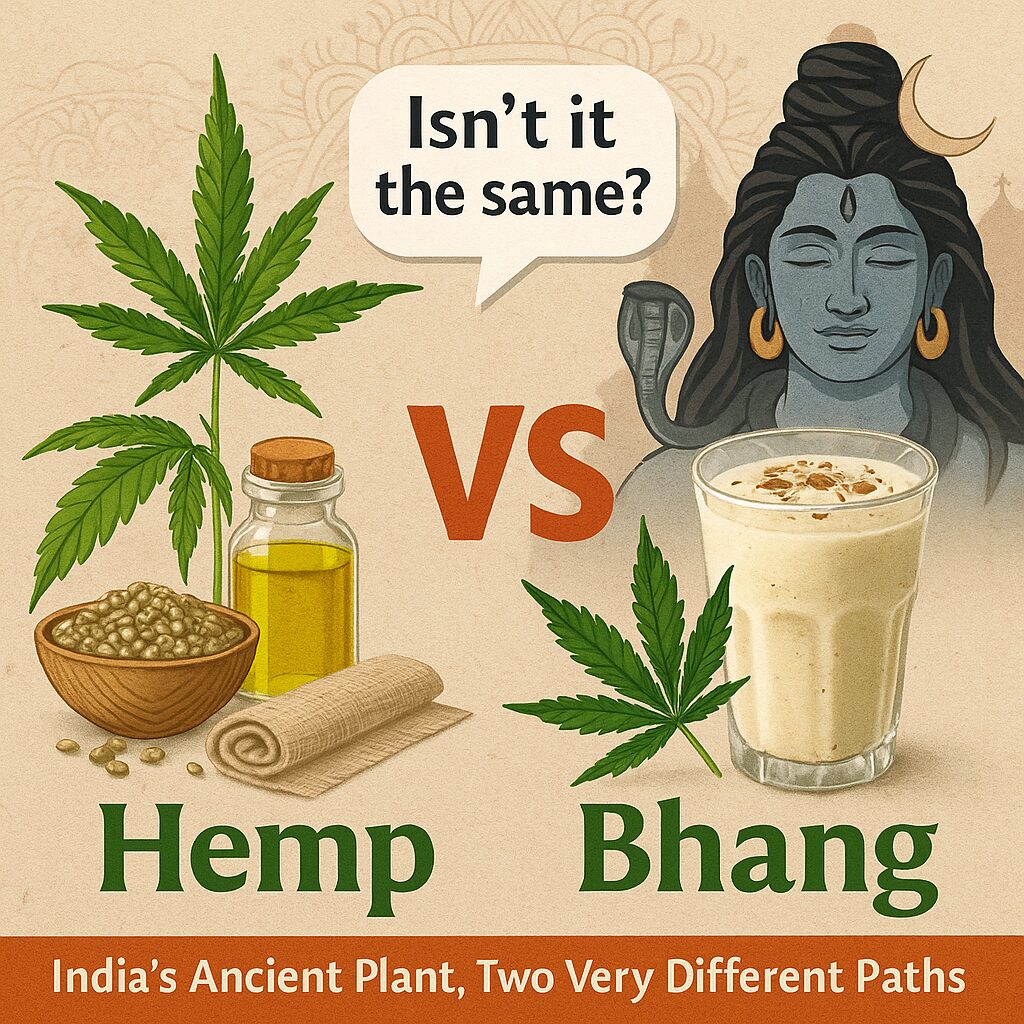
In India, hemp and bhang are often used interchangeably in casual conversations, but are they really the same? The short answer: No!
While both are derived from the Cannabis sativa plant, their uses, legality, psychoactive effects, and cultural context differ significantly. Understanding these differences is vital—not just for curious minds but for entrepreneurs, researchers, and policymakers alike.
Let’s unravel the cultural, legal, and industrial differences between hemp and bhang through an Indian lens.
🌿 What is Hemp?
Hemp is the non-psychoactive variety of Cannabis sativa, cultivated mainly for industrial and nutritional uses. It contains less than 0.3% THC (tetrahydrocannabinol), which means it cannot get you high.
Uses of Hemp:
-
Hemp seeds for nutrition
-
Hemp fibers for textiles and rope
-
Hemp oil for skincare and wellness
-
Hemp leaves for Ayurveda
Popular Indian Hemp Products:
-
Hemp seed powder
-
Hemp protein bars
-
Hemp seed oil
-
Hemp-based apparel
🍃 What is Bhang?
Bhang, on the other hand, is a psychoactive preparation made from the leaves of the cannabis plant, traditionally used in Indian religious festivals like Holi and Shivratri.
It contains higher levels of THC, which is responsible for the intoxicating effects. Often, it’s mixed in milk or thandai during spiritual or celebratory occasions.
🕉️ Historical and Cultural Significance in India
📜 Hemp in Ancient Indian Texts
-
References to hemp appear in Atharvaveda as one of the five sacred plants.
-
Ayurveda has used hemp (referred to as Vijaya) in controlled dosages for treating ailments like pain, epilepsy, and digestive disorders.
🌈 Bhang in Festivals like Holi and Mahashivratri
-
Bhang is deeply rooted in Hindu tradition, believed to be consumed by Lord Shiva.
-
Bhang lassi and thandai are popular during Holi to invoke joy and spiritual euphoria.
⚖️ Legal Status in India
🌾 Hemp Cultivation & Government Policies
-
Legal in Uttarakhand, Uttar Pradesh, Madhya Pradesh, and Himachal Pradesh under state policies.
-
Regulated to ensure THC levels remain below 0.3%.
-
Government supports it under the National Policy on Narcotic Drugs & Psychotropic Substances (2014).
🚫 Narcotic Control & Bhang Regulation
-
Bhang is legal under Indian law because it’s made from the leaves and not the flowering tops.
-
Controlled under the Narcotic Drugs and Psychotropic Substances Act (1985).
-
No industrial cultivation allowed for recreational cannabis in India.
🧬 Biological & Chemical Differences
| Feature | Hemp | Bhang |
|---|---|---|
| THC Content | <0.3% | High (5–20%) |
| Part Used | Seeds, stalks, leaves | Leaves |
| Psychoactive | No | Yes |
| Legal Use | Industrial & nutritional | Religious |
| Common Form | Oil, powder, fiber | Lassi, thandai |
🏭 Uses of Hemp in India
-
Nutrition: Rich in Omega-3, Omega-6, and protein
-
Textiles: Durable, sustainable clothing and bags
-
Paper: Alternative to deforestation
-
Wellness: Anxiety-relief oils, balms
🎉 Uses of Bhang in Indian Culture
-
Festivals: Holi, Shivratri
-
Religious Offerings: Temples in Varanasi and Mathura
-
Traditional Medicine: Occasionally used in Ayurvedic practices
🛍️ Hemp Industry Products vs Bhang Products
🧵 Hemp Products:
-
Hemp protein powder
-
Hemp-infused skincare
-
Biodegradable textiles
-
Hempcrete for eco-building
🍹 Bhang Products:
-
Bhang thandai
-
Bhang lassi
-
Herbal Ayurvedic concoctions (with strict dosage)
💊 Health Benefits: Myth vs Fact
| Claim | Fact |
|---|---|
| Hemp will make you high | ❌ False. Hemp is non-psychoactive |
| Bhang cures diseases | ⚠️ Partially True. Needs regulation and dosage control |
| Hemp is just for hippies | ❌ False. It’s used in industries, nutrition, and medicine |
| Bhang is illegal | ❌ False. Bhang is legal in many states for religious use |
🧾 Compliance & Licensing in India
-
Hemp: Must be cultivated under license from respective state governments.
-
Bhang: Typically distributed through government-authorized shops.
-
No private recreational cannabis sales allowed under Indian law.
📊 Market Trends: Hemp & Cannabis Industry in India
-
India’s hemp industry projected to reach INR 500 crore+ by 2030.
-
Rising use in personal care, plant-based nutrition, and green construction.
-
Startups and MSMEs like Indian Hempstore are collaborating with government and educational bodies to promote regulated growth.
🙅 Common Misconceptions Among Indian Consumers
-
“Hemp and bhang are the same” – False!
-
“All cannabis is illegal in India” – Not entirely.
-
“Bhang is dangerous” – Not if taken responsibly in a regulated manner.
🔮 Future of Hemp and Bhang in India
-
Hemp is gaining traction as an eco-friendly crop that could revolutionize Indian agriculture and textile.
-
Bhang, if researched and regulated, could become part of mainstream Ayurvedic medicine.
❓ FAQs
1. Is hemp legal in India?
Yes, industrial hemp cultivation is legal in states like Uttarakhand and UP under regulated THC limits.
2. Can bhang get you high?
Yes, bhang contains THC and has psychoactive effects.
3. Is bhang a drug under Indian law?
Bhang made from leaves is not classified as a narcotic, unlike ganja or charas.
4. Can hemp seeds be eaten safely?
Absolutely. Hemp seeds are rich in nutrients and do not cause a high.
5. Are hemp and bhang used in Ayurveda?
Yes, both are used in Ayurvedic practices under strict dosage and formulation control.
6. Can I start a hemp business in India?
Yes, but you’ll need proper licenses from the state government and must follow NDPS compliance.
🏁 Conclusion
The confusion between hemp vs bhang stems from a shared ancestry—Cannabis sativa. But understanding their differences can reshape the future of wellness, industry, and agriculture in India. Whether you’re a consumer, investor, or enthusiast, the hemp revolution is here—and it’s rooted in Indian tradition.
🌐 Recommended External Resource:
Ministry of AYUSH – Ayurveda and Cannabis Guidelines